Browse Field Crops, Forage and Turfgrass Production Stories - Page 31

672 results found for Field Crops, Forage and Turfgrass Production
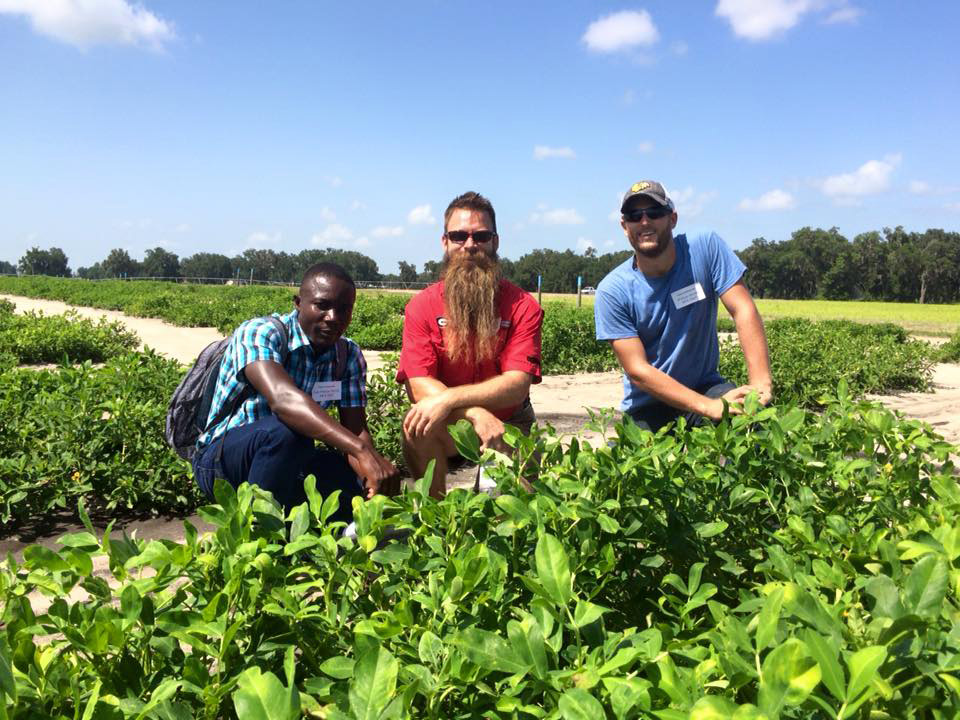
Abraham Fulmer (center) visits a U.S. peanut field with Haitian agronomist Jean Phillipe Dorzin (left) and Will Sheard of Meds & Food for Kids (right), in 2015. CAES News
Plant Pathology Abroad
When he started college, Abraham Fulmer didn’t know he’d study peanuts, work in international development or become fascinated with Haiti.
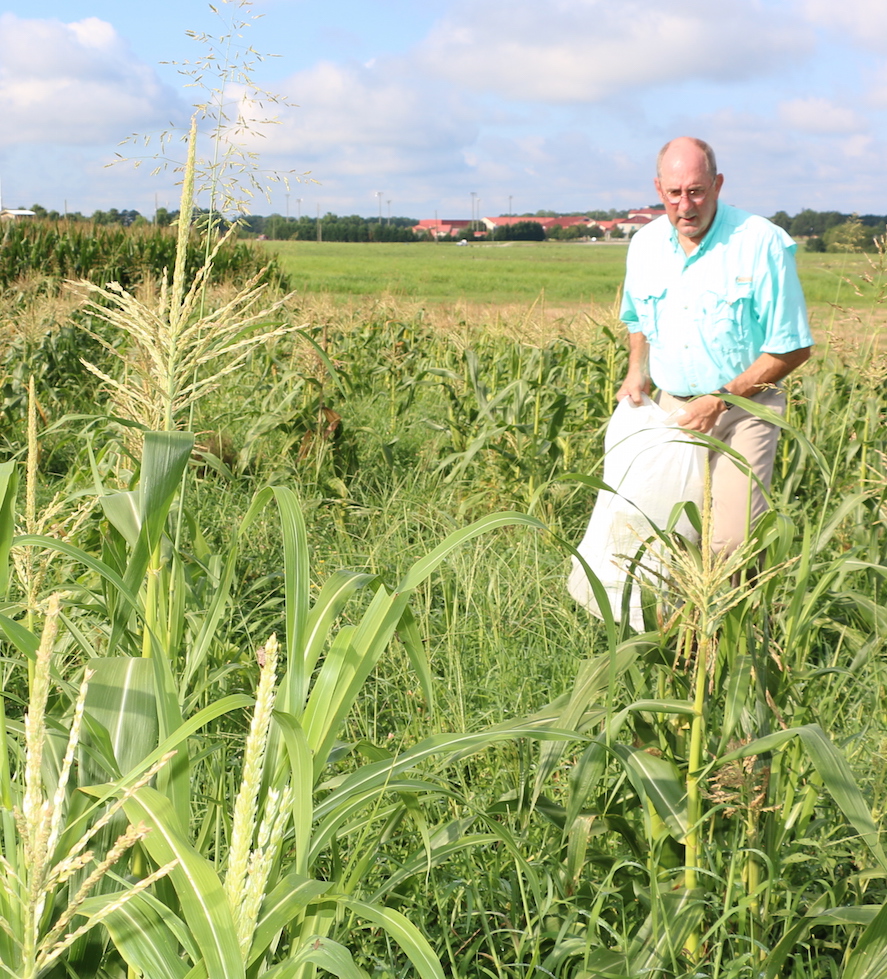
Professor Nick Hill harvests corn from his test plots at the J. Phil Campbell Research and Education Center in Watkinsville, Georgia. CAES News
Corn Boil
The University of Georgia faculty and staff at the J. Phil Campbell Sr. Research and Education Center in Watkinsville will host the center’s annual corn boil and open house on June 28 from 10 a.m. to 1:30 p.m.
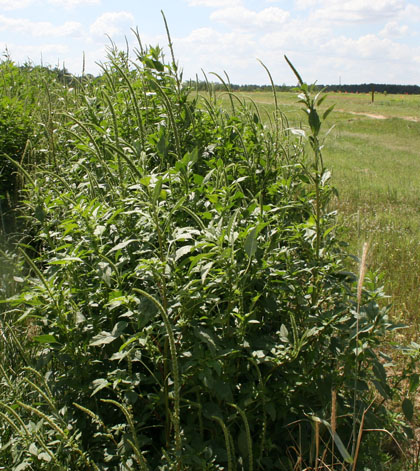
Palmer amaranth can reach heights of up to 7-10 feet. UGA Extension weed specialist Eric Prostko encourages farmers to continue to control Palmer amaranth even after their corn is harvested. CAES News
Palmer Amaranth
Georgia cotton farmers are successfully managing the state’s most problematic weed, glyphosate-resistant Palmer amaranth, by using many methods, including hand-pulling the weed out of their fields. But tackling the weed is drastically cutting into their already limited profits, according to University of Georgia weed scientist Stanley Culpepper.
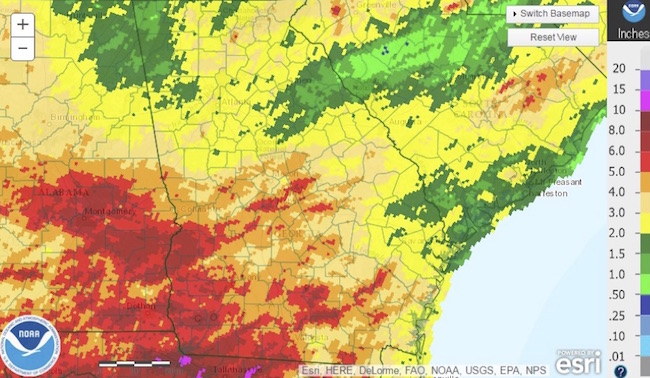
Georgia's April 2016 Precipitation - NOAA CAES News
April Weather
Cool conditions early in April delayed the growth of watermelon seedlings and caused yellowing of some corn plants. Wet fields in the southern half of the state delayed planting and caused problems for corn seedlings and other plants in heavy, wet soils.
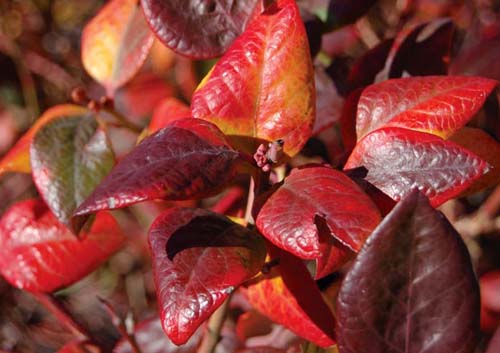
Unlike many blueberry plants, Blue Suede holds on to its foilage throughout the year.  It is brightly colored in the fall and green in the winter. CAES News
Edible Landscaping
The key to creating a visually appealing edible landscape is the artful combination of annuals and perennials. Most edible plants can act as substitutes for annual plants, but there are some options that can substitute for shrubs, vines and small trees.
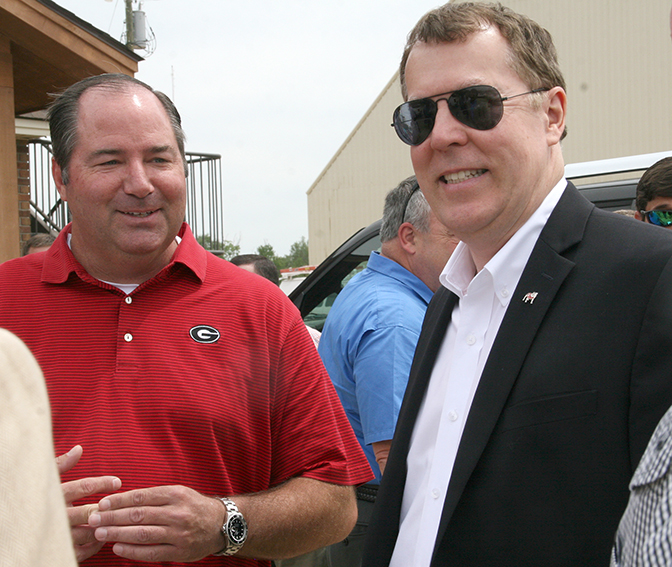
Dean Pardue speaks to agriculture leaders, including Kent Fountain, at Premium Peanut in Douglas, Ga. on Wednesday, April 20, 2016. CAES News
Agriculture Tour
Weeks of visits and tours across Georgia has University of Georgia College of Agricultural and Environmental Sciences Dean and Director Sam Pardue excited about the college improving upon the state’s No. 1 industry — agriculture.
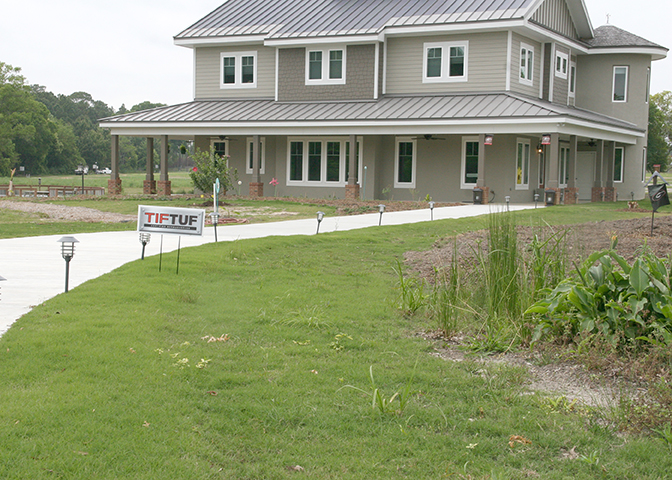
'TifTuf' turfgrass is planted in front of the Future Farmstead on the UGA Tifton Campus Conference Center. CAES News
TifTuf Lawns
The newest University of Georgia turfgrass release, TifTuf™ Bermuda grass, is now available to homeowners. TifTuf’s drought tolerance and shade tolerance make it one of the best choices for establishing a new lawn.
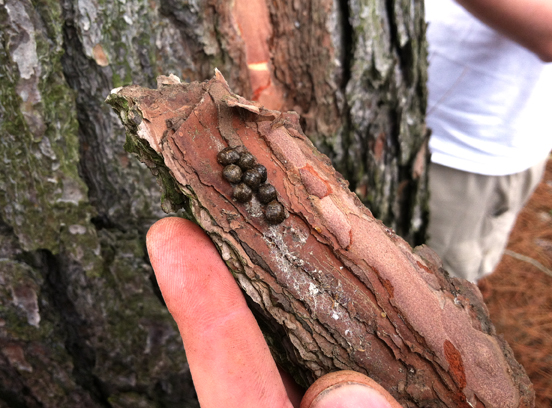
Overwintering kudzu bugs discovered in pine bark. CAES News
Kudzu Bug Decline
Once a nuisance for soybean farmers in the Southeast, kudzu bug populations appear to be declining in the U.S. The decline began in 2014 and is believed to have been brought on by two of the kudzu bug’s natural predators: a fungus and a wasp.
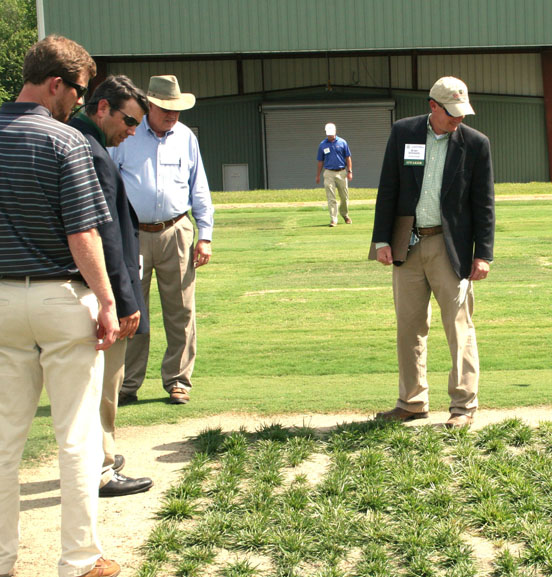
UGA turfgrass breeder Brian Schwartz (right) examines research plots during the turfgrass conference held in 2013. CAES News
Turfgrass Conference
Sod farmers, landscape professionals and sports turf managers interested in learning more about the turfgrass industry’s latest innovations are invited to attend the 70th Annual Southeastern Turfgrass Conference.
Ann M. Steensland, deputy director for the Global Harvest Initiative, will deliver the keynote address at this year's Sixth Annual International Agriculture Day Reception. The event will be held from 3:30-5:30 p.m. on Tuesday, April 19, at the Georgia Museum of Art. CAES News
Food Security in Focus
Ann M. Steensland, deputy director for the Global Harvest Initiative, will deliver the keynote address at this year’s Sixth Annual International Agriculture Day reception. The event will be held from 3:30-5:30 p.m. on Tuesday, April 19, at the Georgia Museum of Art. Hosted by the University of Georgia College of Agricultural and Environmental Sciences Office of Global Programs, the talk and reception are free and open to the public.